Printer App: Print Documents
- 3.8
- Rating
- 100.00K
- Installs
- Free
- Price

 Analysis by App-foxy
I approached Printer App: Print Documents as a practical tools app rather than something I would open every day. Its purpose is straightforward: help me send PDFs and photos from a phone to a printer without first moving files to a computer. That simple goal matters most when I am away from my desk, working from a phone, or helping someone who finds desktop printing unnecessarily complicated.
In my experience, the main appeal is the shorter route between a document stored on the phone and a physical page. The app is free to install, is aimed at everyone, and comes from FIRE Ltd. It is listed as a printer app, but I found it more useful to think of it as a phone-based bridge between personal files and a compatible printer. That distinction is important: it can make printing more convenient, but it does not remove every technical or physical limitation associated with printers.
The current release is version 31.0, and the app has reached over 100 thousand installs with an average rating of 3.8 from around 12 thousand ratings. Those figures suggest a product that many people have tried, while also hinting that the experience is not equally smooth for every phone, printer, or workflow. I would recommend testing it with a small, nonessential document before relying on it for a deadline.
You May Also Like

 Blood Strike: 2.5 Anniversary
Blood Strike’s Loadouts Turn Every Drop Into a Tactical Gamble
A close look at Blood Strike’s custom loadouts: how fast access to signature weapons reshapes its battle royale rhythm, rewards preparation, and narrows the gap between fights.

 Pandora - Music & Podcasts
Pandora’s Music Is Easy to Start, but Harder to Recover
Pandora’s strength is its low-effort path from a seed to a station. Its weak spot is how much confidence it asks you to place in connection, setup, and quiet recovery.

 8 Ball Pool
 Is Built on Rivalries, Rematches, and Routine
A close look at the rivalries, rematches, shared routines, and unanswered safety questions that turn a quick pool match into a persistent mobile community.

 Samsung Music
’s Quiet Strength Is Playing What You Already Own
Its reach comes less from spectacle than from dependable access to a personal library. That simplicity is both the app’s strongest retention engine and its ceiling.

 AccuWeather: Weather Radar
AccuWeather Review: A Quick, Clear Forecast for Everyday Decisions
For everyday plans, the best forecast is the one you can understand quickly. AccuWeather makes rain timing, radar, and local conditions easy to act on, with a few trade-offs.

 Hill Climb Racing
Why Hill Climb Racing Still Turns Crashes Into One More Run
A tiny car, a bumpy hill and one more upgrade: Hill Climb Racing keeps resurfacing because its simple chaos makes every near-miss feel personal.
More From Our News Desk



How the app feels to use in different situations
I find the app’s value depends less on how often I print and more on where the file already lives: when a PDF or photo is on my phone, sending it from there can spare an awkward transfer to a computer. In this section, I’ll look at how that convenience holds up across everyday settings, then turn to the practical choices that make a print job more reliable.
Readability and navigation come first
The strongest part of this kind of app is its direct purpose. I do not have to learn a large office suite just to print a PDF or a photograph. When the interface keeps the task focused on selecting a file, choosing a printer, and starting the job, it is easier to understand than a general-purpose document editor. That is especially helpful for someone who only prints occasionally and does not remember where printer controls are hidden.
I also appreciate the difference between preparing a file and sending it. A PDF usually already has its layout, while a photo may need more attention before it becomes a useful print. I would check the image itself before opening the print flow, because a phone photo can look fine on a bright screen yet produce a disappointing page if its crop or orientation is unsuitable. The app can send the file, but it cannot turn a poorly framed image into a well-composed print.
For a realistic everyday example, imagine receiving a form as a PDF while travelling. Instead of forwarding it to a computer, I could open it on my phone, use the printer app to send it to a nearby printer, and keep the physical copy ready for signing. That is the kind of small time-saving situation where the app makes sense. It is less compelling when I am already sitting beside a computer with a printer configured and ready.
Clear navigation also matters to people who are not confident with technology. A short printing path reduces the number of decisions they need to make. I would still take a moment to review the selected file and printer before confirming, since a simple interface does not guarantee that the correct item has been chosen. In particular, photo folders can contain several similar images, and a rushed tap can send the wrong one.
Motor and sensory considerations
Printing from a phone can be more comfortable than using a desktop for people who rely on a familiar touchscreen. A phone is portable, and the interaction can be completed while seated in a convenient position rather than reaching toward a printer panel or moving between devices. For users with limited reach, that separation may be useful, provided the printer itself is already accessible and ready to receive the job.
At the same time, touch controls create their own challenges. Small targets, crowded choices, or a screen that changes while a printer is being discovered can make the process harder for people with tremors, reduced precision, or visual fatigue. I would use the phone’s normal display settings, such as larger text or stronger contrast, where available, but I would not assume that every part of the app responds perfectly to every system setting. The practical test is whether the important controls remain understandable on the user’s own device.
For someone with low vision, a digital PDF may be easier to read than a printed page, so printing is not automatically the more inclusive option. I would print only when a paper copy is required or genuinely easier to handle. If the document is being printed for another person, checking the font size, contrast, and layout before sending it can prevent an inaccessible result. The app handles the transfer; the responsibility for preparing readable content remains with the person printing.
People with hearing-related access needs may find a visual phone-based workflow preferable to relying on audible printer signals. However, the app should not be treated as a complete substitute for visual confirmation. I would look at the phone for the job status and also check the printer physically, because paper jams, empty trays, or other printer-side problems can interrupt the task without being solved by the mobile app.
Situational access is where it earns its place
The app is most useful when the phone is the device that already contains the file. That includes a PDF downloaded from email, a document received through messaging, or a photo captured moments earlier. Avoiding an extra transfer step can reduce friction for people who are working in a shared space, using a borrowed computer, or managing several devices with different accounts.
I can also see value for family members who need occasional help. Someone may be comfortable taking a photo or opening a document on a phone but less comfortable finding the same file on a computer. A focused printer tool gives them a more familiar starting point. I would still set up the printer connection in advance rather than waiting until the person is under pressure. The app is a convenience layer, not a replacement for basic printer preparation.
For users with limited energy, the ability to remain in one place while choosing a document can be meaningful. It avoids unnecessary walking between a workstation and a printer, especially for a single page. The benefit is smaller if the printer is located far away, requires manual paper handling, or needs frequent physical intervention. Digital convenience cannot solve a printer that is difficult to reach.
There is also a useful distinction between urgent printing and repeated printing. For one or two pages, a phone workflow can feel efficient. For a long packet, many photos, or a job requiring detailed page selection, I would compare the app with the printer’s own software or a computer-based method before committing. A larger screen generally makes reviewing a complex job easier, particularly when mistakes would waste paper or ink.
What I would check before depending on it
The first question is whether the intended printer can be reached from the phone in the current environment. A printer may be switched on yet unavailable because the phone and printer are not connected in a compatible way. I would test discovery with an ordinary document and confirm that the printer shown is the one I expect. This is more reliable than assuming that being on the same general network automatically guarantees a successful print.
The second question concerns the file. The app is designed around PDFs and photos, so I would convert or save other material into one of those forms before starting. For a document that contains sensitive information, I would also consider where the file is stored on the phone and who can access the printed page after it leaves the device. A fast print process is not a substitute for checking privacy in a shared home, office, library, or hotel.
There is a financial detail worth noticing. The app itself is free, but it includes in-app purchases ranging from $5.99 to $39.99 per item. I would review any purchase screen carefully rather than assuming that every part of the experience is included at no cost. This matters most for someone choosing the app specifically because they want a completely free printing solution. The presence of optional paid items may be acceptable to one person and a reason to choose another route for someone else.
I would also remember that the app has an Everyone content rating and supports devices running Android 7.0 or later. That makes it broadly approachable from an age perspective, but age suitability is not the same as ease of use. A child, older adult, or person with a disability may still need help selecting the right file, checking the printer, or collecting the output safely.
Remaining barriers and better alternatives
The biggest limitation is that the app cannot control the whole physical printing environment. It cannot make an unavailable printer reachable, refill paper, clear a jam, correct an empty ink cartridge, or place the finished page within comfortable reach. I see it as a useful link in the process, not a complete accessibility solution.
Another barrier is the difference between a simple print and a carefully formatted print. If I need extensive layout control, precise page ranges, booklet-style output, or detailed finishing choices, I would rather use the printer manufacturer’s app or a computer. Those alternatives may expose more device-specific controls. Their disadvantage is that they can feel heavier and less approachable for someone who only wants to print a single PDF.
For photos, a dedicated photo-printing workflow may be better when borderless output, paper type, color handling, or image placement is important. Printer App: Print Documents is more attractive when convenience matters more than fine control. I would not choose it as my first tool for a large photo project, but I would consider it for a quick reference image, a snapshot, or a basic copy.
There is also a human barrier: the person using the app may not know what the printer is doing after the command is sent. A print job can appear to have failed when the printer is simply processing it, or it can appear successful while the printer is waiting for paper. For users who benefit from clear step-by-step reassurance, I would pair the app with a short routine: identify the file, confirm the printer, send one test page, and inspect the result before sending more.
That routine is one of my most useful recommendations. A single test page reveals connection problems, unexpected scaling, poor image orientation, and printer-side issues without wasting a full batch. It also gives a user with motor or visual concerns a chance to adjust their position, enlarge the phone display, or ask for assistance before the task becomes urgent.
Who should use it, and who should skip it?
I would recommend this app to someone who frequently receives PDFs or takes photos on a phone and occasionally needs a physical copy. It is a sensible fit for quick, uncomplicated jobs where avoiding a computer is the main benefit. It may also help households that share one printer but use several phones, as long as everyone understands how to identify the correct printer and collect the output.
I would be more cautious recommending it to a person who needs advanced print settings, produces large batches, or depends on highly predictable formatting. In those cases, a manufacturer-specific printer app or a desktop workflow may provide better control. I would also hesitate if the user is uncomfortable with in-app purchase prompts or wants a solution with no paid options at all.
For accessibility-focused use, my recommendation depends on the complete setup. The phone may be easier to operate than a printer panel, and remote sending can reduce movement, but the app does not guarantee that every screen, printer, or printed document will suit every ability. I would test it with the actual user, their phone settings, their printer, and the type of files they handle. That practical trial is more valuable than assuming that a general Everyone rating means universal ease.
My inclusive verdict
Printer App: Print Documents succeeds when I treat it as a quick connection between phone files and a printer. Its focused purpose can make an occasional print job less intimidating, and its portability helps in situations where a computer is inconvenient. The strongest accessibility benefit is situational: I can start from the device and location that already work for me.
Its weaknesses are equally practical. Touchscreen precision, printer compatibility, physical paper handling, file preparation, and paid in-app options can all affect the experience. I would not rely on it blindly for important documents, and I would choose a more specialized alternative when layout control or high-volume printing matters.
Overall, I think it is worth trying if your main need is uncomplicated printing of PDFs and photos from a phone. Start with a low-risk test, use the phone’s display adjustments if they help, check the printed result, and keep the printer’s physical limitations in mind. With those expectations, this free tools app from FIRE Ltd can be a convenient option rather than a frustrating promise of one-click printing.
FAQs for Printer App: Print Documents
01What is Printer App: Print Documents and what can it do?
Printer App: Print Documents is a mobile printing utility designed to help you send documents, photos, and other files from an Android or iOS device to a compatible printer. After connecting your phone and printer to the same Wi-Fi network, you can browse supported files, select printing options, and start a print job without transferring the document to a computer first. Available features may vary by device and printer model.
02Which printers are compatible with Printer App: Print Documents?
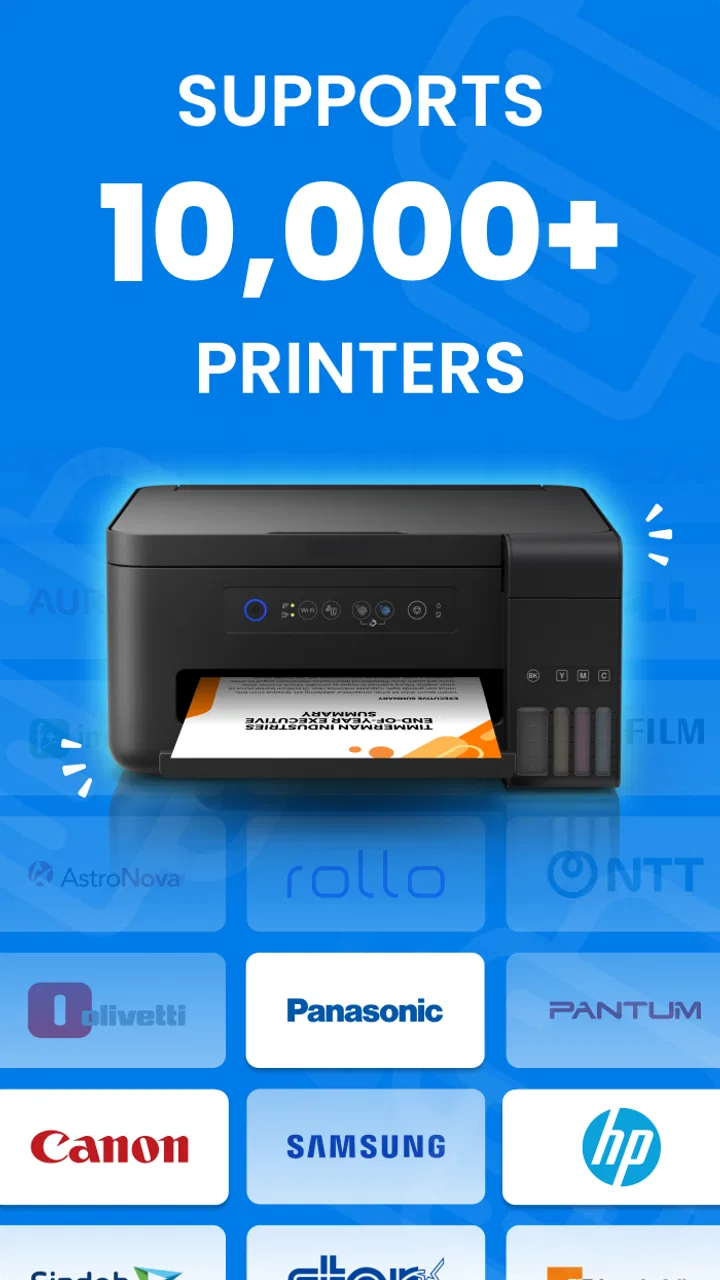
Compatibility depends on the printer manufacturer, model, connection method, and the app’s supported printing protocols. Many modern wireless printers can work when the phone and printer share the same local Wi-Fi network, while older printers may require a manufacturer-specific app, a computer connection, or additional setup. Before downloading, check the app listing and confirm that your printer model is supported to avoid connection problems.
03Can I print documents and photos directly from my phone?
In most cases, the app lets you choose files stored on your smartphone and print them directly. Commonly supported content can include PDF documents, office files, images, and photographs, although exact formats may differ between versions and platforms. You may also be able to adjust paper size, orientation, color, number of copies, and page range. Review the preview carefully before confirming the print job.
04Is Printer App: Print Documents free to use?
The application may be available as a free download, but some functions can be restricted by advertisements, in-app purchases, subscriptions, or premium printing options. Basic printing may be accessible without payment, while advanced tools such as ad removal, expanded file support, scanning, or additional customization could require an upgrade. Check the current Google Play or App Store listing for accurate pricing and trial conditions.
05What should I do if the app cannot find my printer?
First, make sure the printer is switched on, connected to Wi-Fi, and using the same network as your phone. Avoid guest networks, VPN connections, or mobile data during setup, since they can prevent local device discovery. Restarting the printer, phone, and router can also help. If the printer still does not appear, update the app and printer firmware, then consult the manufacturer’s compatibility instructions.
Pros
- Prints documents
- photos
- and PDFs directly from your phone.
- Supports common file formats for convenient mobile printing.
- Simple interface makes basic printing tasks easy to start.
- Useful for home
- school
- and small-office printing needs.
- Can reduce the need to transfer files to a computer first.
Cons
- Printer compatibility may vary by brand and network setup.
- Some advanced features may require in-app purchases or subscriptions.
- Wireless printing depends on a stable Wi-Fi connection.
- Large files or high-resolution photos may take longer to process.
- Privacy permissions may be needed to access files and photos.

Printer App: Print Documents
Gallery